
Google gives Gemini control of an entire robot body
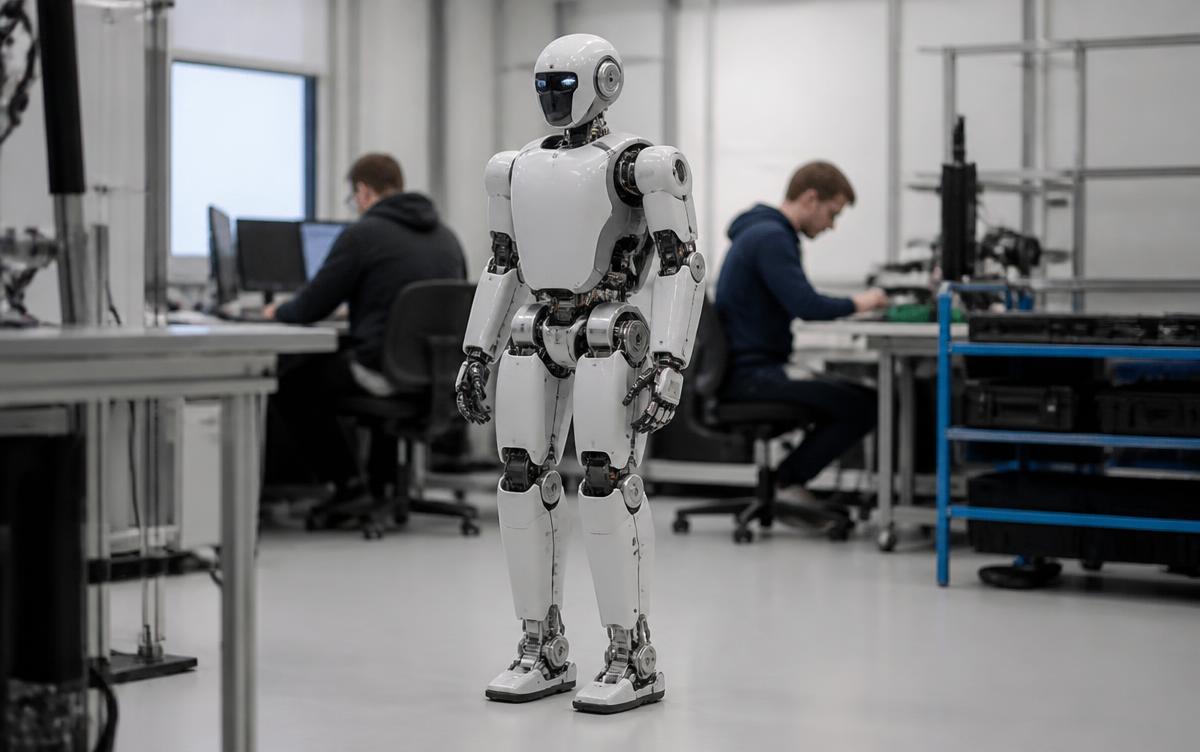
Google DeepMind says the latest version of its Gemini Robotics model can control entire humanoid robots. Where the previous model handled a humanoid upper body only, Gemini Robotics 2 now supports whole body motions from feet to fingertips, according to the announcement published by Google DeepMind.
Key points
- Google DeepMind demonstrated robots balancing, crouching, reaching and coordinating two arms while carrying out multi step household and warehouse style tasks.
- Google DeepMind notes that its robots have more to advance in movement speed, and it adds that this update is an important step towards the skills needed to complete more.
- The model is a vision language action system, which means it reads a scene, interprets an instruction and then issues the motor commands itself rather than replaying a pre-programmed routine.
- The development on the record is the Google DeepMind announcement, reported by The Verge.
What's happening
Alongside it the company updated Gemini Robotics ER, its embodied reasoning model, which now holds tasks over longer periods and understands when tasks begin and end. A smaller on device version is offered for robots that cannot rely on a network connection.
Access is being handled through a waitlist and a set of partner robot makers rather than a general release.
No funding figure, timescale or headcount has been published alongside the announcement, so the scale of the work cannot yet be measured from the reporting itself.
The account is carried by The Verge, which has not named the delivery partners, suppliers or funders involved.
What we're watching
- •Delivery updates published by Google DeepMind on the work described.
- •What Gemini Robotics confirms about its own role and contribution.
- •Further industrial automation results that test the claim made here.
- •Follow up reporting from The Verge that adds figures, named partners or dates.
Original source: The Verge · 30 July 2026