
Researchers create a magnetic slime robot that squeezes through tiny spaces, changes shape and grabs objects
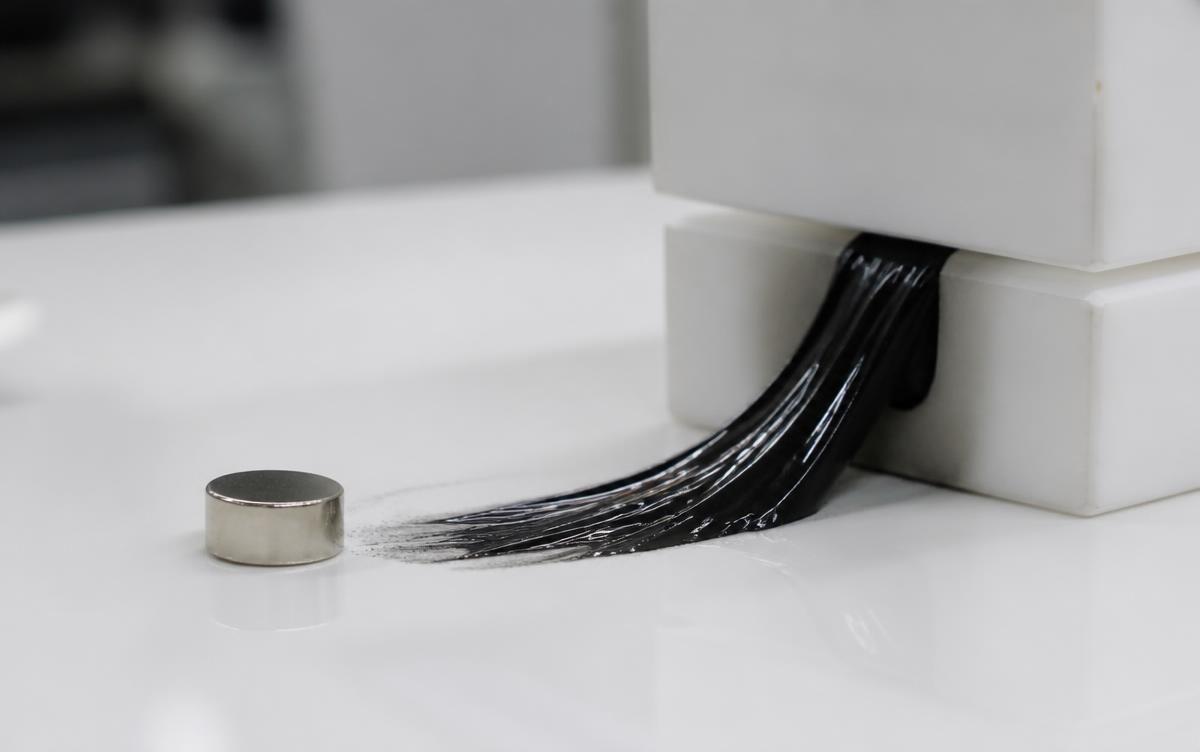
A research team at the Chinese University of Hong Kong led by Professor Li Zhang has built a magnetically controlled slime robot that can deform, move and grab objects. The material behaves as a soft magnetic composite.
Key points
- Published experiments show the slime stretching to more than seven times its original length under a permanent magnet, splitting and recombining.
- The team, with lead author Dr Mengmeng Sun, expects the strongest early use to be medical, such as retrieving accidentally swallowed objects like button batteries and sharp bones.
- The findings were published in Advanced Functional Materials and the work has been covered widely by international outlets.
- Chinese University sits at the centre of the story, which concerns the Chinese University announcement.
What's happening
The researchers said it is encouraging to know that the study has aroused interest and attention, and that they will keep exploring how the slime robot can be put into practical use. Safety work continues because the raw material carries neodymium particles that must be coated before any use inside the body.
No funding figure, timescale or headcount has been published alongside the announcement, so the scale of the work cannot yet be measured from the reporting itself.
Chinese University is the named party in the account, and the reporting is carried by CUHK Faculty of Engineering. Other partners, suppliers or funders have not been identified.
The scope described is Wales wide rather than tied to a single site, which means access will depend on how the work is distributed once it is running.
In their words
“The slime robot, which was developed by Prof. Li Zhang and his research team, can deform, grab objects and move, just like the sci-fi movie creatures. Indeed, the robot design was inspired by the movie Venom, but it is different from Venom in a way that it is expected to bring benefit to human beings in the future.”
What we're watching
- •Delivery updates published by Chinese University on the work described.
- •What Chinese University of Hong Kong confirms about its own role and contribution.
- •Further research and commercialisation results that test the claim made here.
- •Follow up reporting from CUHK Faculty of Engineering that adds figures, named partners or dates.
Original source: CUHK Faculty of Engineering · 24 July 2026